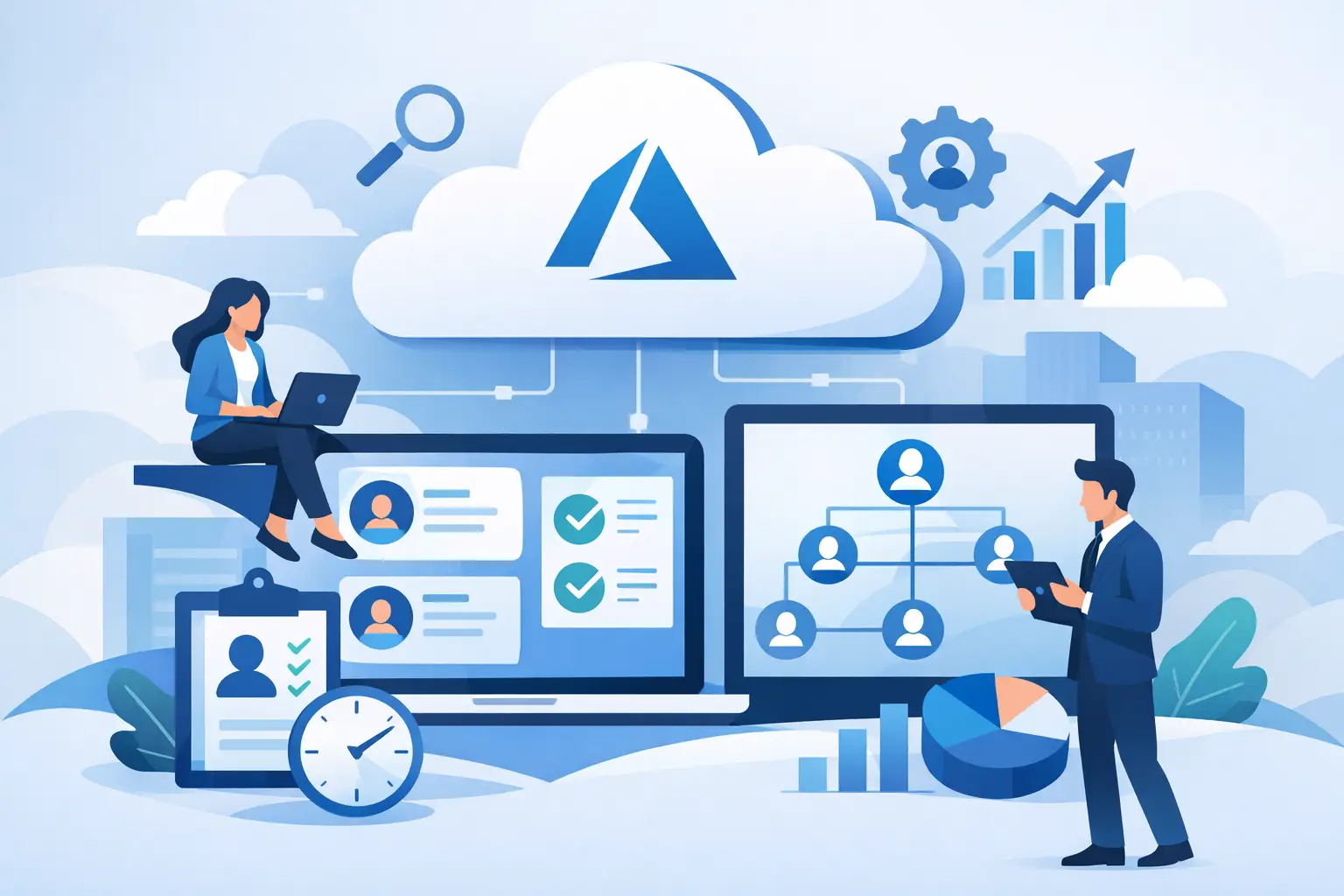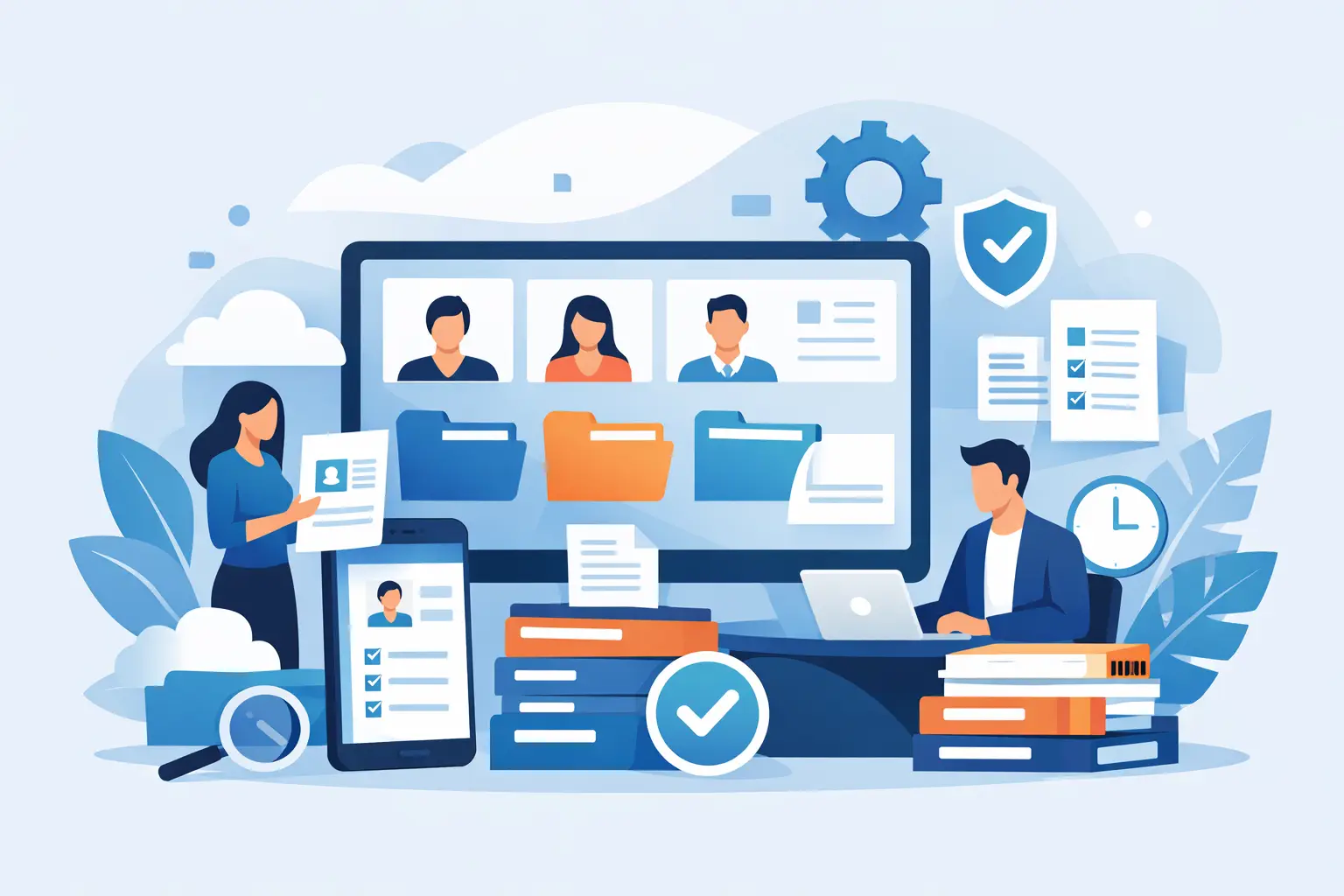

New-hire onboarding is when operational chaos shows up fastest: missing documents, unopened access, managers unsure of progress and HR chasing email. Running employee onboarding in an HR system turns a personal checklist into a measurable organizational process.
What system onboarding includes
A strong process starts before day one: documents, signatures, banking details, equipment and access. On day one and after come training, policy orientation, manager tasks and completion tracking.
All of this should live on the employee file—not in separate threads—so completion, gaps and ownership are visible.
Templates by employee type
HQ staff, field staff and managers should not share one identical task list. Build templates by role/unit, with room for unique tasks without breaking the standard.
Roles and ownership
HR owns process design and control. Direct managers own professional onboarding tasks. IT/security own access. Employees complete documents and updates via self-service wherever possible through an employee portal.
Clear ownership in the system means fewer items fall between cracks.
Systems connection and automation
Strong onboarding connects to core data, payroll and identity systems. Creating an employee record can automatically trigger a document pack, manager tasks and reminders. See also connecting HR systems.
Keeping documents and statuses in an HR system ensures continuity after onboarding ends—the file continues with the employee.
Metrics to track
Time to complete required documents, on-time onboarding closure rate, manual reminder count, time-to-access and new-hire satisfaction at 30/90 days. These metrics reveal whether the process works or only looks organized.
Good onboarding is not only a welcome event. It is a system process that shortens time-to-productivity, reduces errors and leaves a professional impression from day one.
Pre-day-one onboarding
The preboarding stage shapes much of the experience. Sending forms early and collecting documents and digital signatures saves a chaotic first day. The employee arrives more prepared and HR chases fewer gaps.
Give transparency: employees should see what is done and what remains. Managers need the same visibility.
Connect training and culture
Technical onboarding alone is not enough. Include team introductions, core policy and role expectations. You can also link signup to onboarding sessions through an event system.
Completion records in the employee file show who finished mandatory training and who did not.
Probation milestones as part of the flow
Onboarding does not end after week one. Define 30/60/90-day checkpoints, including a manager conversation and status update. Automation can open those tasks on time.
Bottom line: employee onboarding in an HR system succeeds with templates, ownership, self-service, automation and metrics. That shortens time-to-productivity and leaves an organized impression from week one.
Align recruiting with onboarding
A common gap sits between ATS and HR systems. A candidate becomes an employee, but data does not transfer cleanly or on time. Define a clear interface: which fields move, when the employee file opens and who validates.
The more stable that interface, the earlier onboarding starts with fewer errors. It also improves the experience of a candidate who already signed and still waits for an orderly process.
After 90 days, review with managers what onboarding missed and fix the template. Continuous onboarding improvement is one of the highest-return, relatively low-effort moves.
New-hire experience as a success metric
Measure not only document completion but also readiness after week one and day thirty. A short portal question can reveal gaps the checklist misses: missing systems training, weak team introduction or day-one task overload.
Fix those gaps in the onboarding template itself. Each next hire then benefits from cumulative improvement rather than the same recurring failures.
Operational summary
Onboarding in an HR system works with role-based templates, clear ownership, pre-day-one tasks, new-hire self-service and metrics across 90 days. Without those, onboarding returns to email chasing.
Invest in template improvement after every hiring wave. It is one of the processes where small repeated improvement is felt immediately by the next hire and hiring manager.
Orderly onboarding in an HR system is one of the fastest investments for improving new-hire experience and reducing operational load.
A rollout order that works
Day 1 in the system: core fields from payroll, a direct manager, and pre-day-one tasks. Week 2: documents and signatures. Week 3: a 30-day time-to-productivity metric. Without that order, onboarding returns to email. See HR implementation.