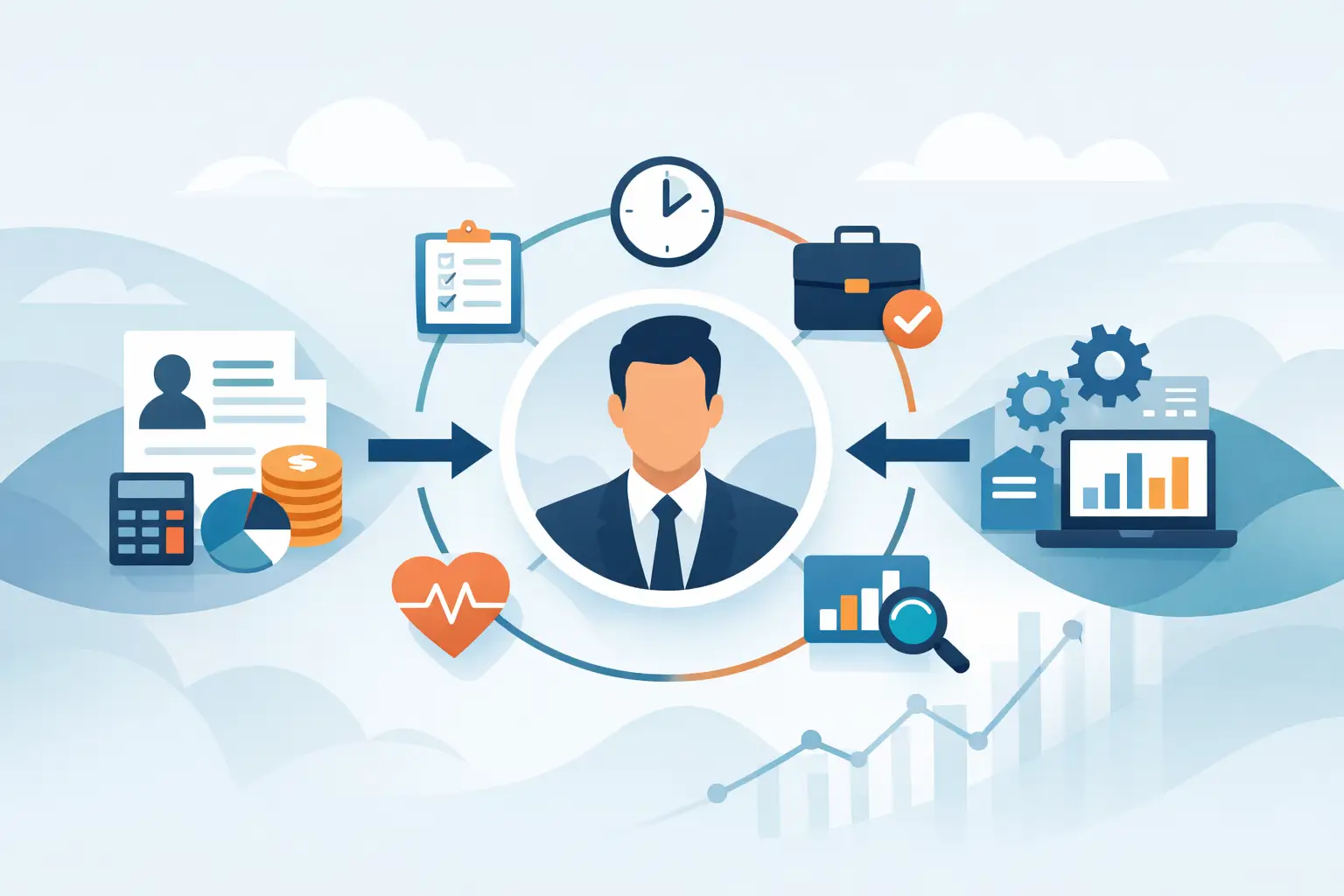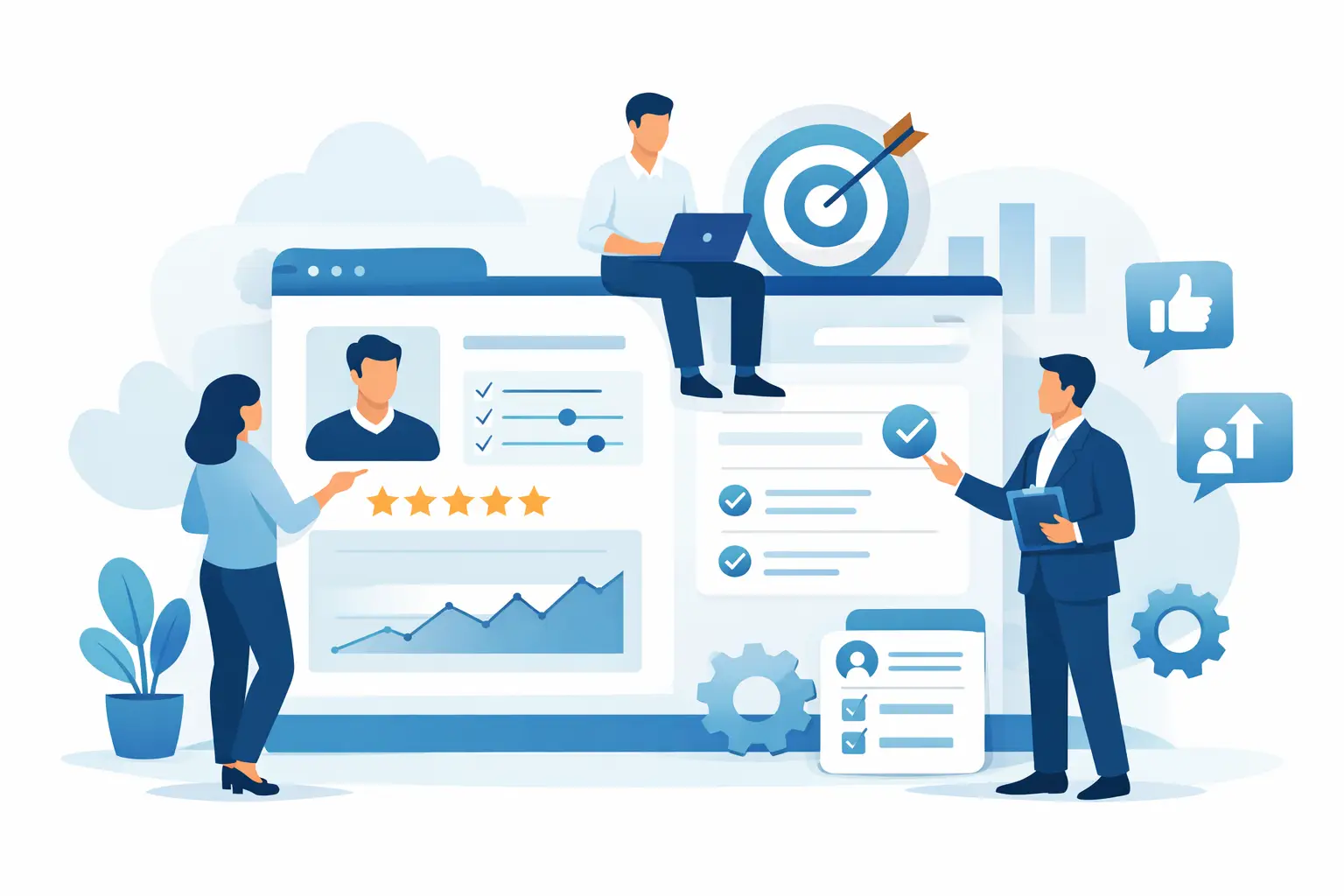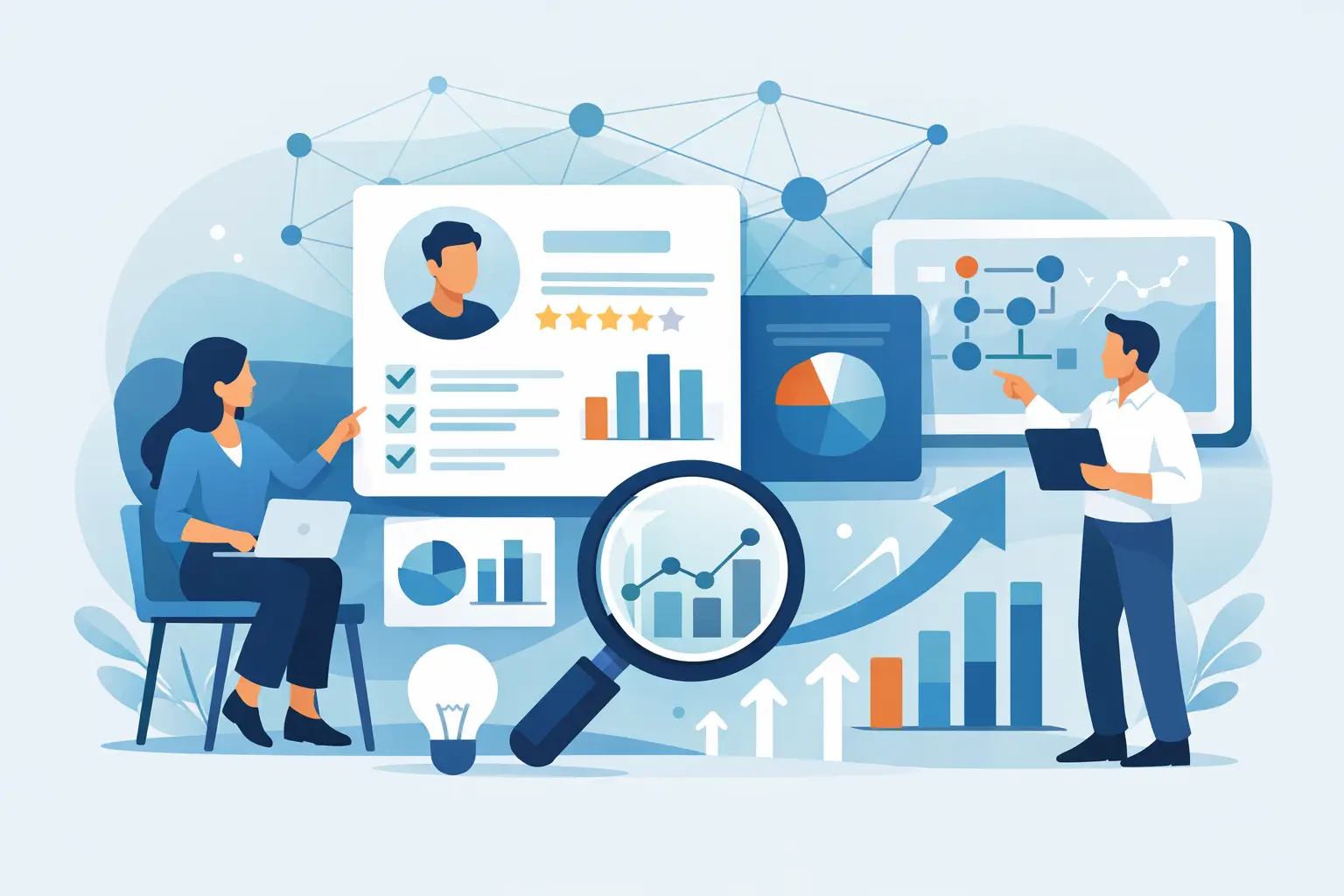
When an HR manager needs to check an employee's status, she shouldn't open a payroll system, an Excel file, a shared folder and a performance evaluation system - and then ask a direct manager to fill in details in a message. This is not just a frustrating work experience. This is an operational problem that slows down decisions, increases errors and makes it difficult to maintain a reliable situational picture. The question How do you connect HR systems to the organization therefore begins not with technology, but with understanding which decisions the organization wants to make faster and based on which data.
Correct connection between systems is not a project of transferring information from one side to another. The goal is to build a single work environment where employee data, HR processes, manager actions and management reports are based on a clear and up-to-date source of information. When the connection is well designed, the organization reduces manual work, maintains control over permissions and allows HR personnel to focus on management rather than data collection.
Why HR systems disconnect from each other
In most organizations, the split is created gradually. The payroll system was implemented for reporting and payment. An ERP system handles the organizational structure, budgets or cost centers. Another tool was purchased for surveys, another tool for recruiting, and evaluation processes remained in Excel or forms. Each system may perform its function well, but there is no common operational language between them.
The result is duplication. An employee updates an address in one system, but the data remains old in another system. A manager receives a list of employees that does not match the current organizational structure. HR has difficulty understanding if a performance evaluation has been completed, if an absorption process has been initiated or if a mandatory document is missing from the employee's file.
The price is not just a waste of time. Inconsistent data creates compliance risk, undermines the credibility of reports and makes it difficult for managers to act in a timely manner. In a medium or large organization, even a small gap between systems can turn into tens of hours of manual correction each month.
How to connect HR systems to the organization by process, not by screen
The right starting point is process mapping, not a list of systems. Instead of asking "Which system will we connect the employee portal to?", it is correct to ask what happens from the moment an employee is hired, moves between positions, participates in an evaluation, goes on vacation or terminates employment.
In each process, three things need to be defined: what is the event that starts it, what information is required to carry it out, and who is responsible for confirming or updating each step. So, for example, hiring an employee can start with an update from the recruitment or payroll system, open a digital employee file, assign tasks to the manager and IT, send forms to the employee and update the corporate portal. Not all data needs to go to every system, but every party needs to get the exact information they need.
Establish a source of truth for each figure
One of the common mistakes in integration projects is trying to make every system a "source of truth". In practice, each type of information should have a clear owner. The payroll system, for example, can be the source of truth for employment details and salary components. An ERP system can hold the structure of units and cost centers. A central HR system can manage the employee file, documents, evaluations, surveys, tasks and approval processes.
This decision prevents conflicts. If an employee's role changes, it must be defined where the change was made, which systems accept it, and what happens in the event that the update fails. Without such rules, the organization accepts several versions of the same truth.
We start with data that affects daily work
No need to put everything together on the first day. A proper project starts with the core data: employee ID, employment status, organizational unit, direct manager, role, start date and relevant contact information. Once this data is flowing consistently, it can be extended to processes such as documents, trainings, performance appraisals, corporate events and surveys.
A tiered approach reduces risk and generates early value. If managers can already see an updated list of employees, open an evaluation process and access authorized documents in one place, the organization feels the improvement even before all the systems have been connected.
Choosing the right way of integration
Not every connection requires the same level of complexity. In some cases, a scheduled synchronization once a day is sufficient - for example for data that does not change frequently. In other cases, an almost immediate update is required, such as a change in the direct manager that affects permissions, tasks and approval processes.
Connecting via an API is suitable when the systems support stable interfaces and allow data to be transferred in a controlled manner. Secure files can be an effective solution when dealing with old systems or periodic processes. Sometimes it is right to combine the two methods. The test is not how sophisticated the solution is, but whether it is reliable, monitorable and easy to maintain over time.
It is also important to define exception handling. What happens if an employee appears on payroll but is missing from the HR platform? Who gets notified if a role does not match the defined role list? Integration without error control transfers the problem from Excel to a management screen.
Information security and permissions are part of the design
HR systems hold sensitive information: employment details, personal documents, performance data and sometimes also medical or disciplinary information. Therefore, connecting systems must be built together with a permission policy, and not remain a technical decision made at the end of the project.
The principle should be simple: each user sees only the information he needs to perform his job. An employee can access his personal file and the forms relevant to him. A manager sees his employees and the data necessary for management. HR get a broader approach depending on their role. Management receives an organizational picture and reports, without revealing personal information that is not relevant to the decision.
In a corporate cloud environment, it is important to also examine information encryption, documentation of operations, identity management, backups and data location. A platform based on Azure infrastructure can provide a layer of enterprise reliability, but the responsibility does not end with the infrastructure. Authorization definitions, approval processes and internal control should also be accurate.
Unify the work experience, not just the data
The greatest value is obtained when the connection between the systems reaches the users themselves. A manager does not need to know from which system a certain figure came. He needs to see in one action his employees, open tasks, assessments awaiting approval, required documents and relevant insights.
In the same way, an employee should not search between systems to update details, complete a document or register for an event. Organizational portal and a mobile-optimized interface make processes accessible where the work happens. This is a fundamental difference between technical integration and a connected work environment.
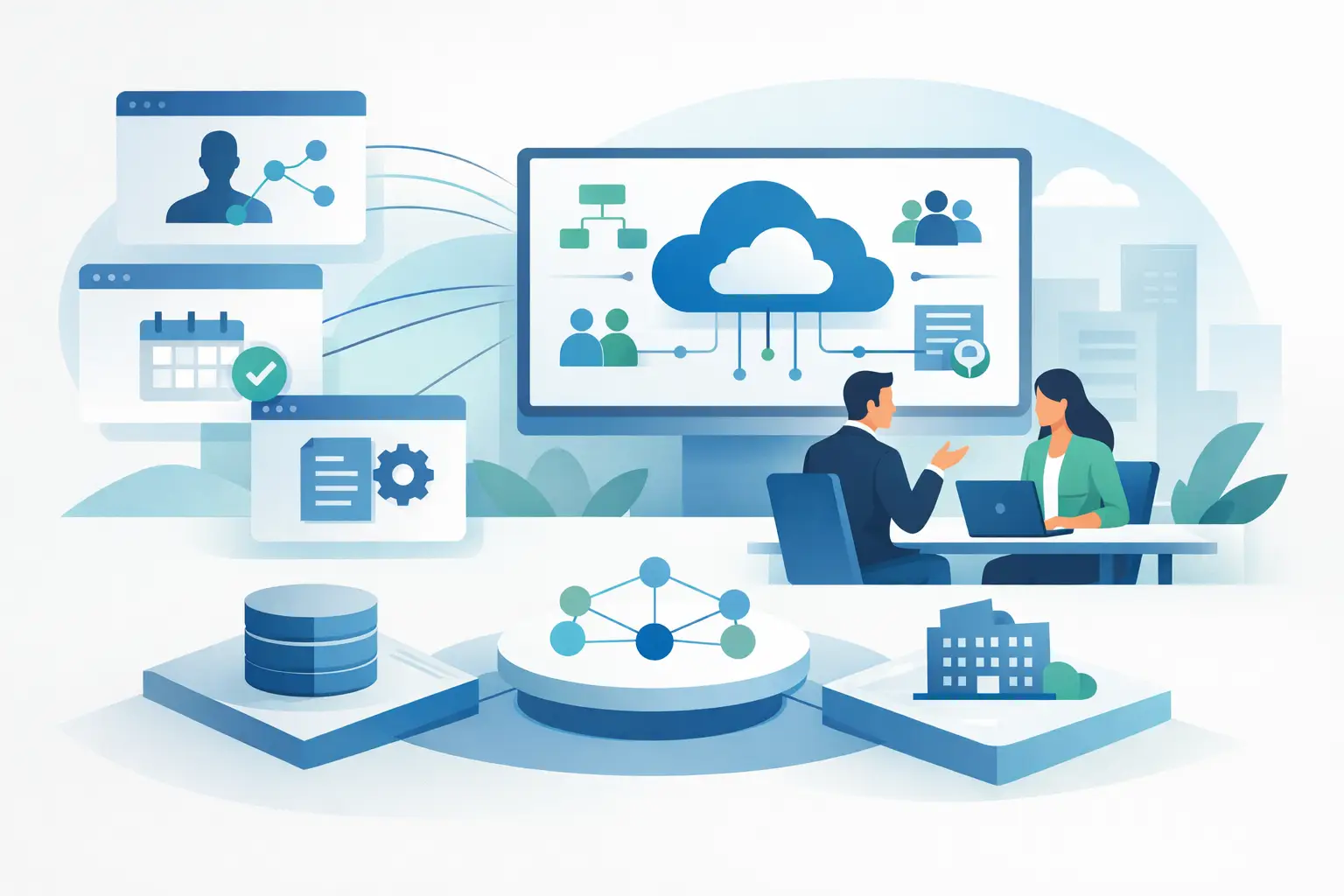
An integrative platform like B2E can bring together the digital employee portfolio, evaluation processes, surveys, automations and corporate communication, while receiving data from payroll and ERP systems. Instead of adding another point tool, the organization builds an operational layer that connects the information and the required action.
Indicators that show if the connection really works
An integration project should be measured by business outcome. One measure is process handling time: how long it takes to open an employee intake, complete an assessment, or collect manager approvals. Another measure is data quality: how many records require manual correction, and how many anomalies are detected between systems.
Adoption should also be measured. If managers keep requesting files from HR instead of using the system, the information may be there but the experience isn't clear enough. If employees aren't completing tasks from mobile, the process may be taking too long or the alerts may be inaccurate.
In many organizations, the most important improvement is responsiveness. When data, documents and processes are in one connected place, HR can identify delays earlier, managers can act on an up-to-date snapshot, and management can make decisions based on data rather than manual collection.
Connecting HR systems is not a one-time goal but an infrastructure for organizational growth. You should start with a process that produces a real load, define clear ownership of the data and build a work environment from it that simplifies the next action of each employee and manager.