
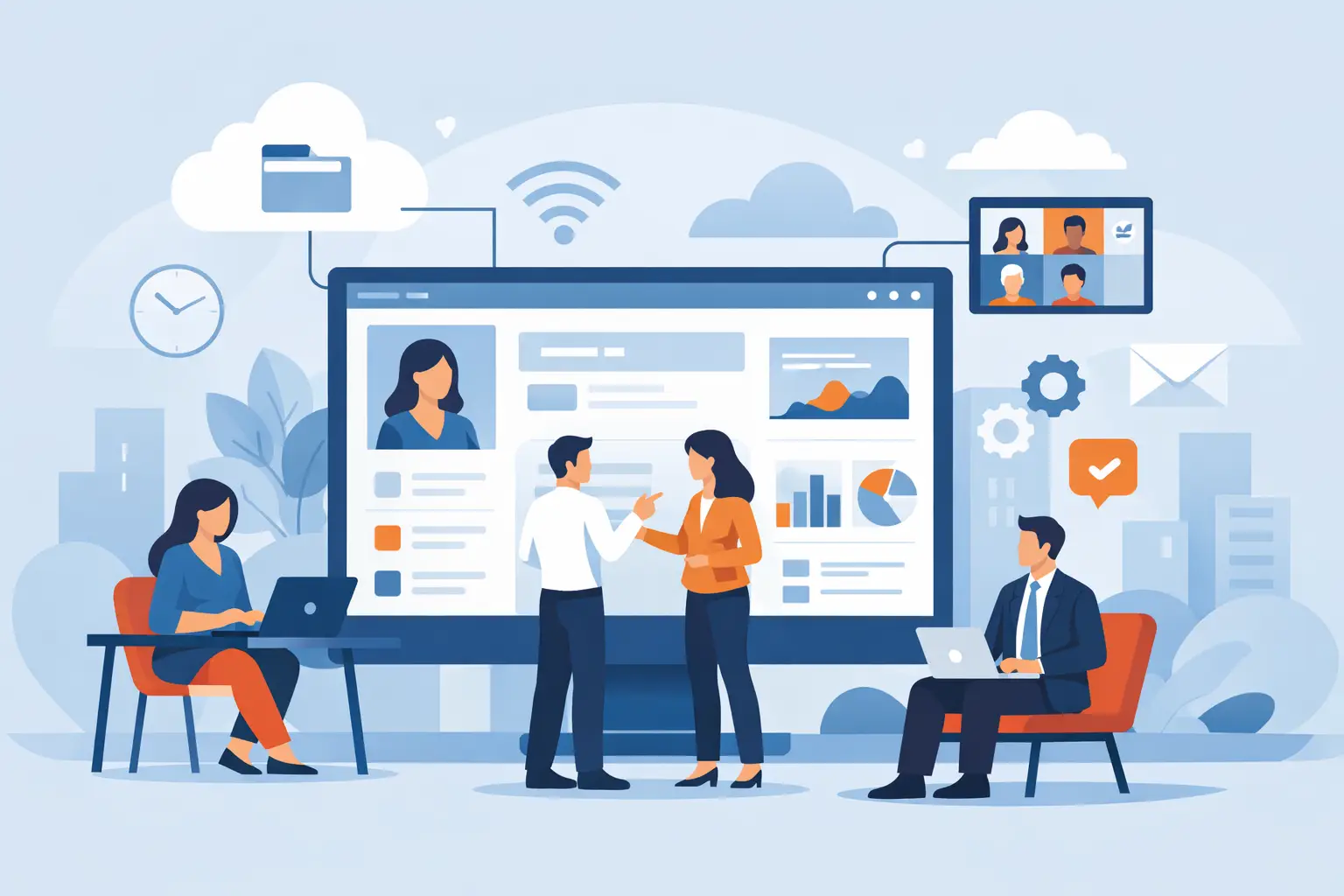
An employee portal pays off when it saves time, cuts routine HR tickets and makes internal communication visible — not when it is a pretty intranet. Those benefits appear only when the portal is connected to live data, permissions and workflows people actually need.
Fewer routine tickets to HR
When employees can update details, submit a request, find a form or check status without email, HR load drops. That does not dump responsibility on employees; it frees HR for exceptions, policy and manager support.
Measure a drop in repeat tickets on the same topic, not just visits. Visits without completed tasks are noise. Details in employee self-service portal.
Faster service for employees and managers
A second benefit is response time. Someone looking up policy at 10pm should not wait until tomorrow. A manager approving requests from a phone shortens delays for the team.
Without an HR system behind the portal, data goes stale and the benefit reverses: people return to email after one failed attempt.
Internal communication that is actually seen
A good portal centralizes news, updates and unit messages — instead of email threads that disappear. Connect it to internal communications to promote important content, not to duplicate the same message on every channel.
A side benefit: you can measure exposure. If a policy page is never opened, that is a wording or placement problem — not “employees don’t read”.
Onboarding and process registration in one place
A new hire needs documents, tasks and an introduction to the organization. A portal tied to onboarding and event registration shortens day one and reduces manual lists.
Ongoing processes — reviews, surveys, forms — also benefit from a homepage shortcut for a limited period after launch.
Conditions that turn a benefit into a result
Benefits do not come from design alone. You need SSO, precise permissions, mobile access, content in the languages people use, and clear page ownership. Without ownership, the portal fills with dead content.
Before buying, use the employee portal buyer’s guide and portal best practices.
When a portal will not help
If the data source is wrong, if there is no human path for exceptions, or if you launch dozens of processes at once — people give up. Start with two or three high-volume workflows, measure, then expand.
For an HR-connected implementation see the B2E employee portal. A portal linked to the employee record, communications and events produces measurable benefits; a disconnected portal produces another slogan.
One metric in week one
Count HR tickets for "where is the form / payslip / my status" before and after launching two self-service processes. If the number does not drop, the portal is pretty and the data is wrong — or the human exception path is missing.
