
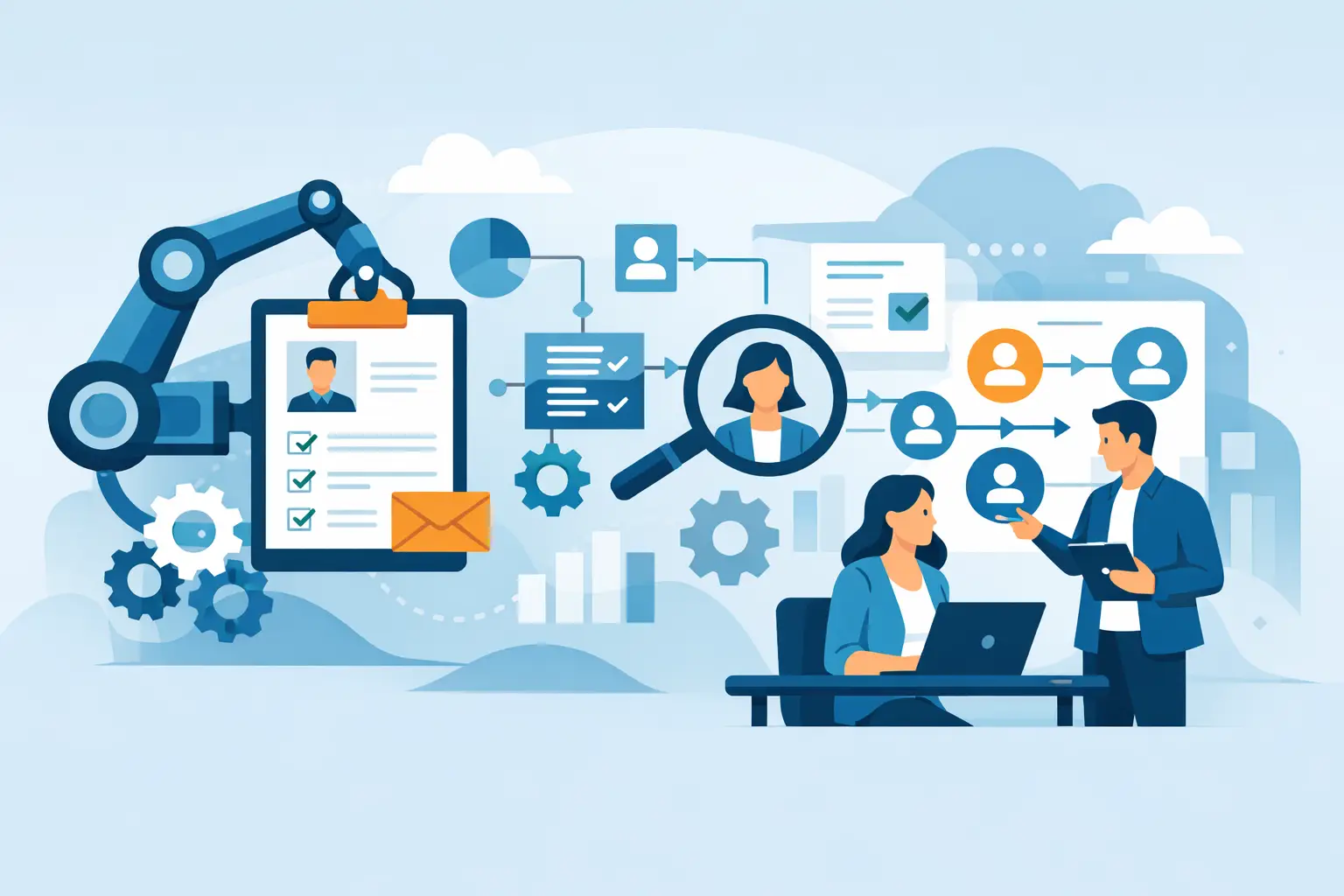
Many organizations search for “an HR system” as if one product solves everything. In practice, HR is a system of processes: onboarding, employee files, evaluations, internal communication, surveys, events and self-service. An HR systems guide for organizations should help decide which components are needed, in what order to implement them, and how to keep them connected.
The first question is not which vendor is largest, but where the process breaks today. Is employee data scattered? Are evaluations in Excel? Do employees contact HR for every simple request? Those answers set priorities.
Foundation layer: employee file and operational HR
Without a source of truth for the employee, every extra module sits on partial data. The first layer is usually an HR system that consolidates core data, documents, permissions and workflows around the employee file.
This layer should connect to payroll, ERP or attendance systems rather than force duplicate entry. It also needs organizational permissions: who sees what, who approves and who owns updates.
Performance management layer
Once the employee view is stable, goals and evaluation cycles can sit on the same data. A performance management system should support cycles, forms, feedback, goals and development plans—connected to the employee file, not isolated.
A common mistake is launching evaluations before org structure and managers are accurate. The process then breaks before the first conversation.
Employee experience layer: portal, communication and surveys
Employees should not need to understand every back-office HR system. They need one clear place for routine actions. That is where an employee portal consolidates forms, information, messages and self-service.
Alongside it, an internal communications system enables targeted messages, exposure measurement and distribution records. Employee surveys complete the picture by turning feedback into a measurable process with owners and follow-up.
Events as part of the HR stack
Training, welfare and conference events are not separate from HR. An event registration system manages invitations, approvals and attendance on the same employee data—one foundation instead of disconnected tools.
Building a roadmap
Work in stages: (1) employee file and core data, (2) operational workflows and forms, (3) portal and self-service, (4) evaluations, surveys and events. Define success metrics at each stage: time to find information, process completion, fewer HR tickets and better manager experience.
Architecture matters too. Prefer a platform that connects modules over products that do not share permissions, identity and data. A good HR system is measured not by screen count, but by the organization’s ability to run accurate, fast and controlled processes.
Common mistakes when selecting HR systems
The first mistake is buying an isolated module for every point pain. That creates five tools with five identities and no single employee view. The second is starting with advanced features before core data is trustworthy. The third is judging vendors by demos alone, without testing integration, permissions and real implementation time.
Demand edge scenarios: manager change mid-evaluation, onboarding with missing documents, an event with unit quotas, and a survey that creates follow-up tasks. If the system breaks there, it is not ready for a complex organization.
IT and HR together
An HR system is not a one-department project. HR defines processes and policy; IT owns identity, security and integrations; leadership sets business success metrics. Without a shared working table, implementation stalls and adoption weakens.
Appoint an owner per module, set a realistic timeline and publish transparent usage metrics so the organization sees early where intervention is needed.
Exit criteria per stage
Do not move to the next stage only because “the system is live.” Move when data is clean, users are active and an operational metric is improving. That prevents expanding existing gaps into new modules.
In the end, an HR systems guide is not a shopping list. It is a decision framework: what first, what next, and what must stay connected for value to appear on the ground.
Prioritize by organizational maturity
An organization still managing documents in shared folders should not start with advanced engagement surveys. It needs an employee file and core processes. An organization with a stable file can move to portal and evaluations. A mature organization can connect surveys, communications and events to the same foundation and measure employee experience end to end.
Matching sequence to maturity saves money and reduces resistance. Employees and managers adopt tools that solve daily pain before they adopt analytical tools.
Also examine regulation, subsidiary structure and multi-site needs in planning. Those requirements affect permissions, cloud hosting and UI languages—and therefore the platform choice itself.
