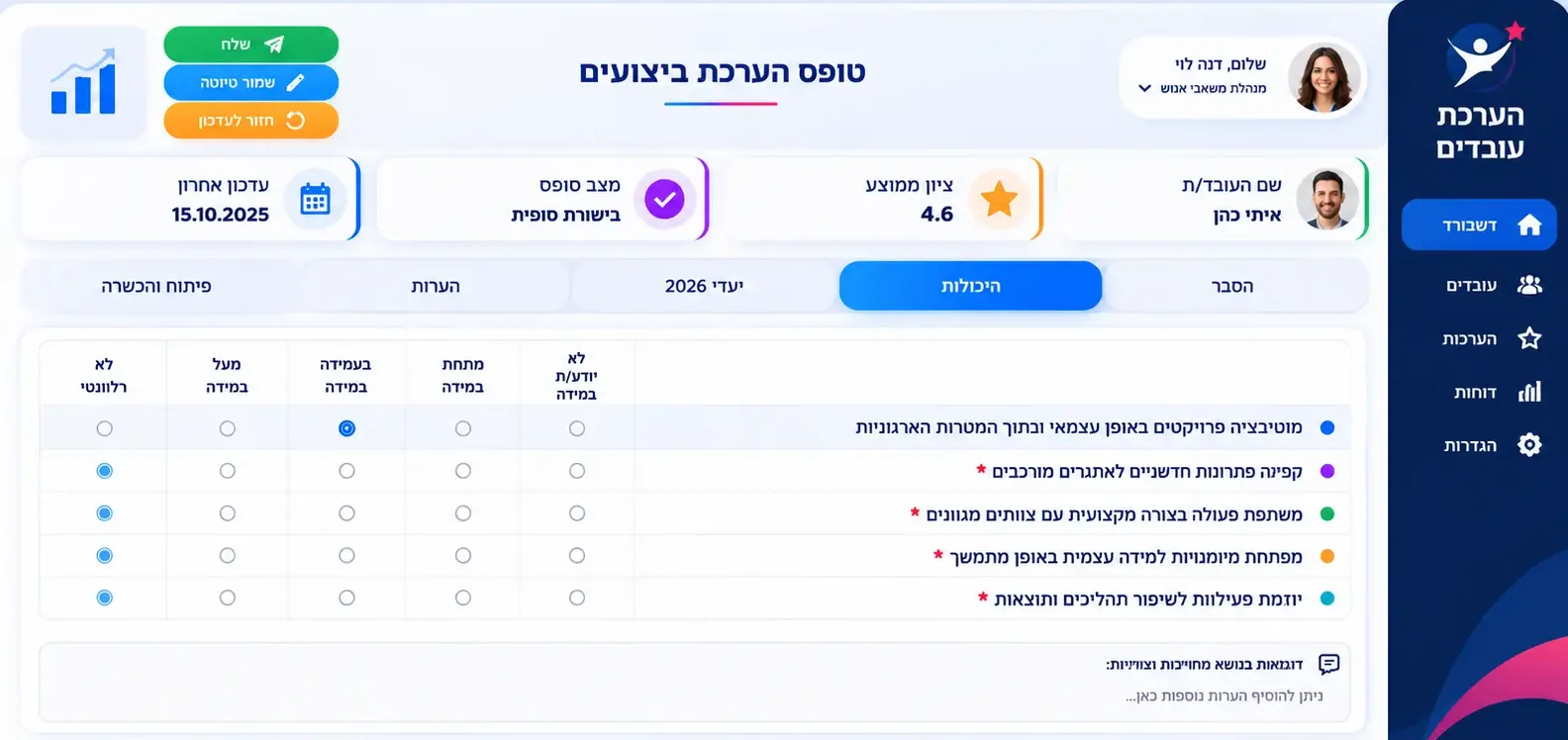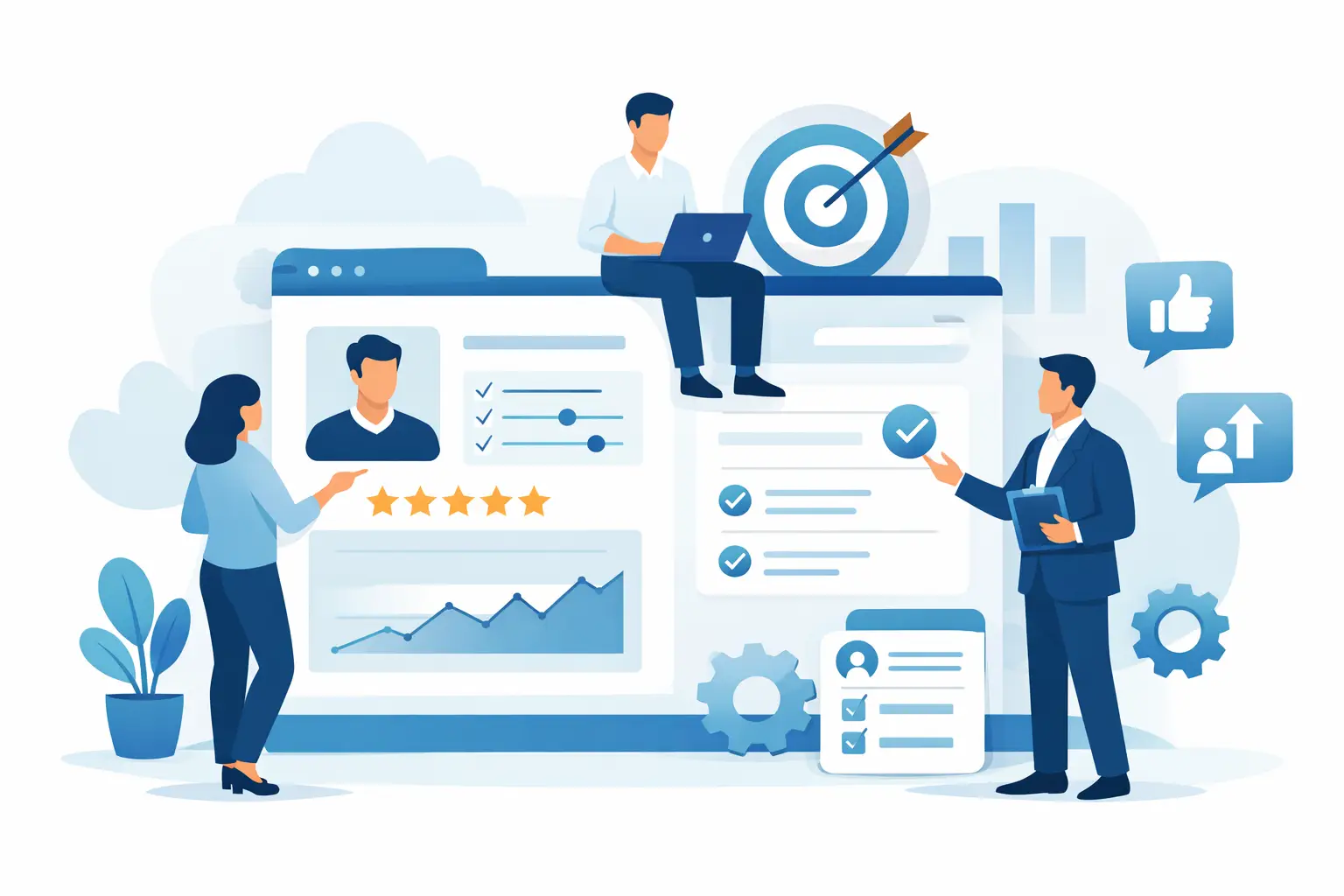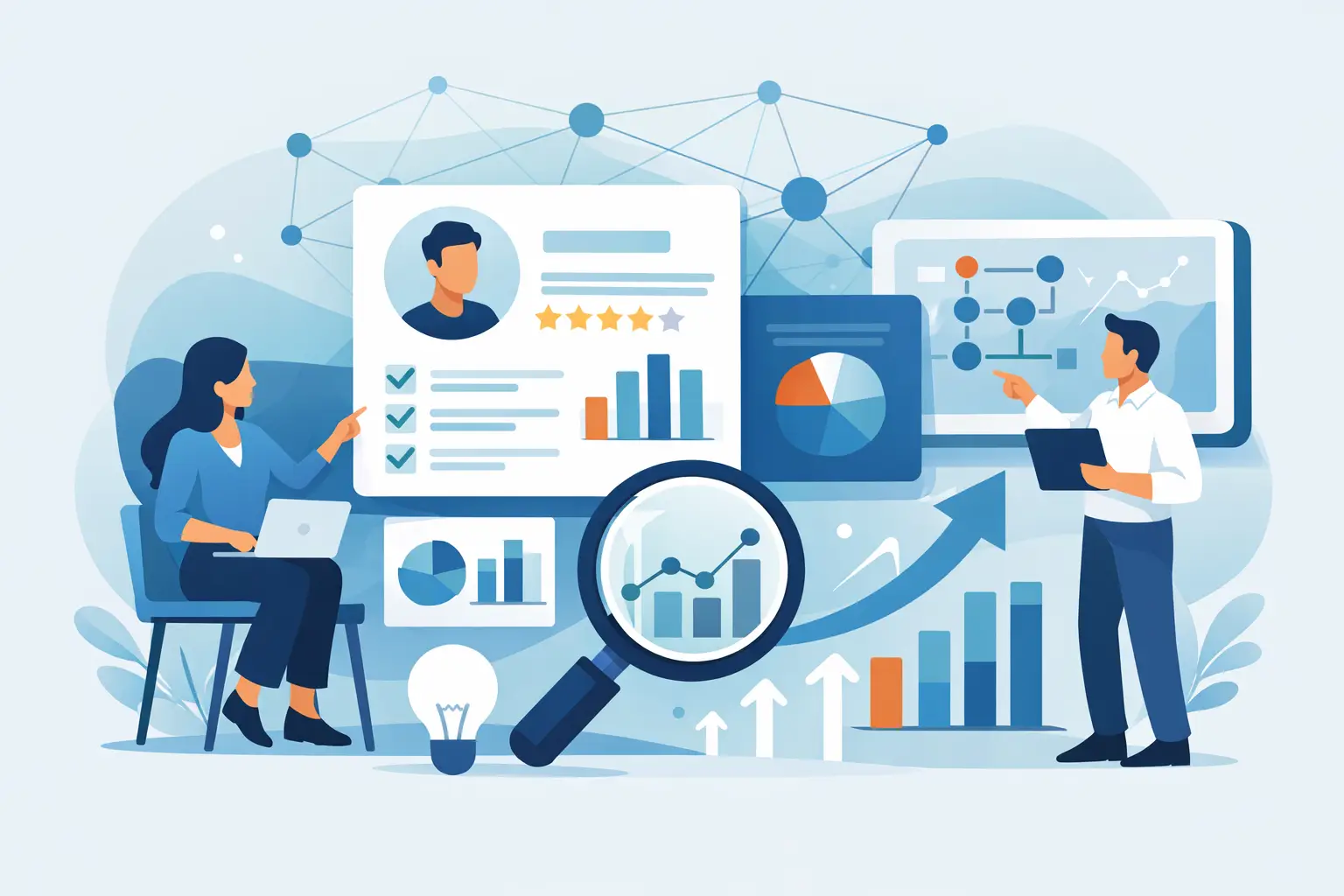
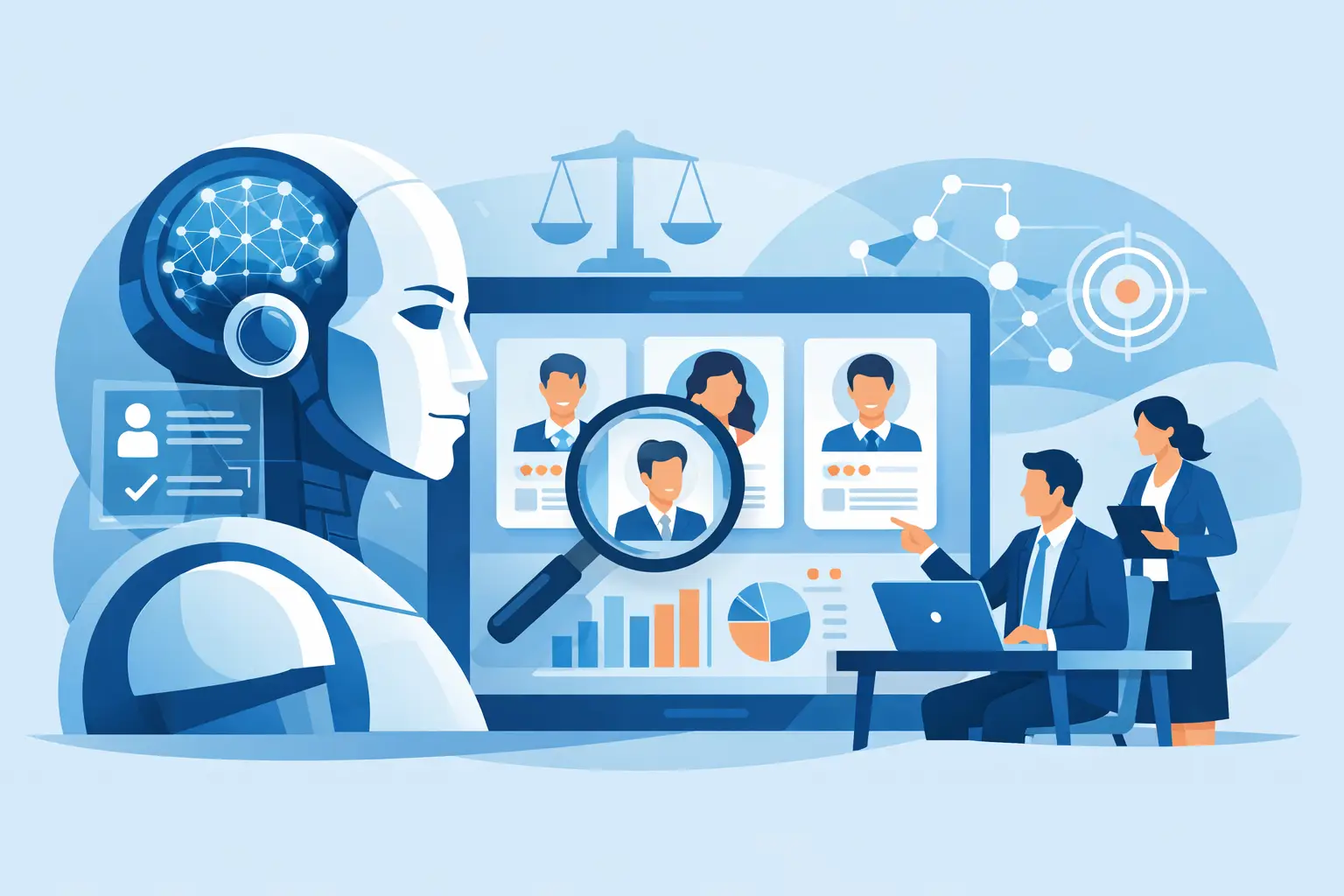
An annual review that rests on a partial memory and ends in a form nobody acts on has little value. The future of AI in employee evaluation is a change in the workflow around that review. Managers and HR get a consistent way to see performance, skill gaps, development patterns, and risk while there is still time to respond. The manager's judgment stays in place.
Mid-size and large organizations already hold employee data in several systems: the employee file, payroll, attendance, goals, surveys, training, and feedback notes. The gap is operational context. When each source stands alone, the manager assembles the picture by hand, and HR struggles to hold one standard across business units.
Why a review cycle needs AI in the workflow
A useful review is a sequence. It starts with goals and expectations, continues with feedback through the year, and turns into development conversations, training, promotions, or retention plans. In many organizations the sequence breaks. Goals sit in one place, manager notes in another, and pay or promotion decisions happen without the full picture.
AI can shorten the distance between collecting information and a management action. It can summarize open feedback, surface themes that repeat across conversations, flag a gap between a stated goal and reported progress, and suggest questions for the review meeting. Decisions then rest on relevant facts and on a shared professional language. The benefits of AI in HR show up in that kind of bounded task, and the same pattern is described on the AI topic page.
The right setup leaves the manager-employee conversation with the people in it. When preparation, organization, and documentation are handled in the process, the manager has more time for a concrete conversation about development.
The future of AI in employee evaluation starts with connected data
A good recommendation cannot come from the review form alone. A system that sees only an annual score can produce a shallow conclusion. A management decision needs the review tied to relevant base data: role, tenure, org structure, goals, development history, earlier feedback, and other organizational processes.
That requires an orderly operational base. A digital employee file is the information layer that shows who the employee is, what changed over time, and which actions already happened. A connection to payroll and ERP adds context, provided access follows role and permission.
One platform that joins the employee file, review processes, surveys, forms, and automations reduces conflicting versions and missing facts. It also supports a shared process while each business unit keeps questions and goals that fit the role or the population. Consistency belongs in the measures, the permissions, and the controls.
From a text summary to management context
One of the most practical AI uses is summarizing text. A manager who receives dozens of open answers from a 360 review or an engagement survey should be able to see the main themes without reading only to hunt for them. The system can group insights, show repeated patterns, and separate strengths, blockers, and items to check.
A summary is a reading aid. One unusual phrasing, a one-off team event, or a missing fact can change the meaning. The output should show the source and the level of confidence, and the manager should be able to open the original answers. AI should speed understanding and keep the complexity visible.
Where AI saves time inside the cycle
The largest gain comes when AI sits inside the workflow. A separate service that requires copying data between systems adds a step. Inside a digital employee evaluation, the system can, before the cycle opens, flag employees without current goals, managers who have not finished feedback, or units with a low completion rate. During the cycle it can send reminders that match status, and mark forms whose answers are too general or lack supporting examples.
When the manager prepares the conversation, a brief can cover goals, results, feedback points, and commitments from earlier meetings. The meeting then goes to clarification, agreement, and an action plan. After the conversation, automation can open professional-development tasks, schedule a follow-up, or route a relevant topic to the authorized HR owner.
HR gets a wider picture too. An employee evaluation management system can show completion gaps between teams, whether managers use a consistent language, and populations where burnout or a development need is showing up. That is a way to run the process in real time, before the issue becomes a late annual result.
Decisions that stay with a person
The dangerous mistake is to treat an AI score, recommendation, or ranking as an objective decision. Employee evaluation includes context that is not always measured: a role change, a hard project, a temporary constraint, the quality of collaboration, market conditions, and team structure. Historical data can also carry bias from the previous process.
Promotion, reward, termination, and employee classification stay with people. Those decisions need a manager and HR to review them, and a record of the reasons. The system can recommend, alert, and summarize. Fair management remains a human duty.
A large organization also needs clear governance: who may see which information, which data enters the model, how long outputs are kept, how wrong information is corrected, and when a human must approve an action. A secure cloud foundation, precise permissions, and an activity log are baseline conditions.
Roll AI out against one stuck step
Start from a defined business problem. The first question is where the review process stalls: form completion, preparing managers for conversations, inconsistent feedback, or difficulty seeing patterns across the organization. Each problem needs a different capability and a different success measure.
Begin with one process, such as summarizing feedback before a review conversation or drafting suggested follow-up actions. Then check whether time was saved, whether the conversation improved, whether completion rose, and whether managers actually use the output. If they do, extend to more units and to development, retention, and internal mobility.
Set the organization's language first. AI produces more usable output when the goal model, company values, performance levels, and role definitions are current and consistent. A system that speaks the way the organization already works is easier for managers to adopt.
A connected platform such as B2E performance management can run these capabilities on orderly employee data, under permissions, inside a review process people already recognize.
The organizations that get the most from AI in employee evaluation are the ones that define a clear process, keep management accountability, and turn each insight into a measurable action with the employee and the team.